AIR-C3 Study - Applied Implementation Research for Clean Cooking in Cambodia
Visit our website: www.airc3.org
Over 3 billion people use biomass fuels (like wood, charcoal, and coal) for cooking. This leads to household air pollution (HAP), which causes about 2.3 million million premature deaths annually from cardiovascular and respiratory diseases, diabetes, kidney disease, cancer, and adverse birth outcomes. Attempts to make burning these fuels cleaner have not significantly reduced air pollution, replaced biomass stoves, or shown clear health benefits. Focus has now shifted to cleaner cooking solutions, such as liquefied petroleum gas (LPG) and electricity.
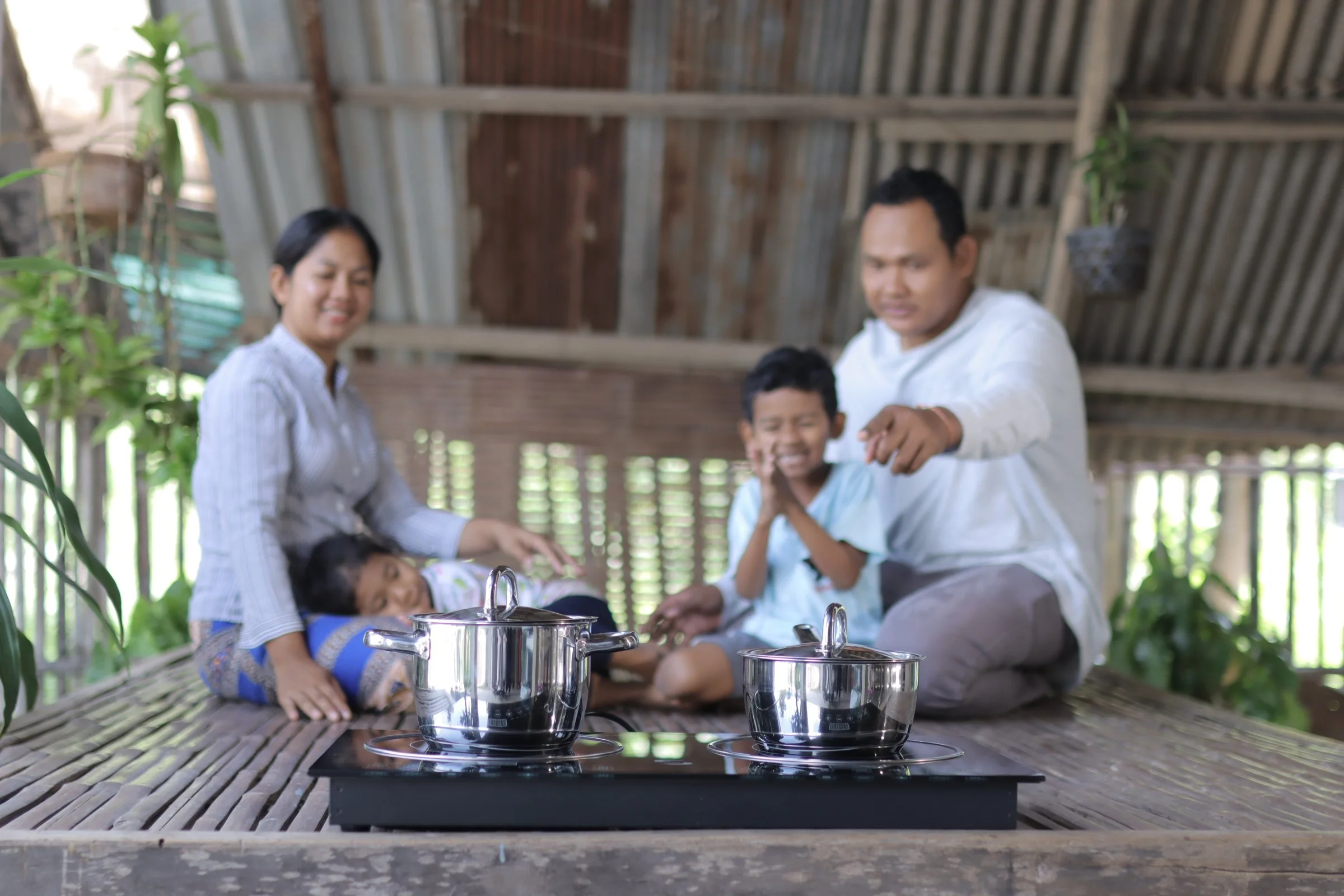
Recent evidence shows that using cleaner fuels can significantly lower exposure to hazardous air pollutants (HAP). In our Household Air Pollution Intervention Network (HAPIN) trial across multiple countries, providing households with free LPG stoves and fuel led to nearly full adoption and reduced exposures by over 60%. This change increased the percentage of households meeting the World Health Organization (WHO) guideline for fine particulate matter (PM2.5) from 17% to 66%. However, the exclusive use of LPG did not last after the trial ended, indicating the need for strategies to ensure ongoing use of clean cooking technologies. Additionally, LPG may not be ideal in some areas due to its cost, fuel access challenges, and pollution from burning it, which may limit health and benefits. This study will investigate electric induction cooking as a potentially cleaner and more effective technology on a large scale. Our project, Applied Implementation Research for Clean Cooking in Cambodia (AIR-C3), will create and assess strategies to encourage affordable purchase and consistent use of electric induction stoves among low-income households in peri-urban Cambodia through a hybrid type II trial. The specific aims are:
Aim 1. Strategy development. Develop, refine, and test implementation strategies for the purchase and use of induction cookstoves. This aim focuses on identifying determinants of induction stove purchase, use, and biomass disuse, and on refining implementation strategies through formative research and piloting activities. Methods and findings from Aim 1 will be described elsewhere.
Aim 2. Hybrid trial evaluation. Evaluate induction stove promotion strategies developed under Aim 1 using a five-arm, parallel-group, cluster-randomized hybrid type II trial. This aim assesses the effectiveness of four integrated implementation strategy packages on induction stove purchase, induction stove use, and biomass stove disuse, alongside key implementation outcomes assessed using the RE-AIM framework.
Aim 3. Economic evaluation and modeling. Estimate the costs, benefits, and incremental cost-effectiveness of the stove promotion strategies. This aim evaluates the relative economic performance of the implementation strategies tested under Aim 2 to inform policy, program design, and future scale-up.
This study will be among the first to measure the impact of theory- and evidence-based promotion strategies to increase uptake and sustained use of induction stoves to reduce biomass fuel use. AIR-C3 will apply systematic approaches to implementation strategy development, establish plausible mechanisms of change for these strategies, and conduct a robust economic evaluation as part of a hybrid trial design. The novel measurements on the effectiveness of induction cooking for reducing HAP exposures among underserved communities will establish the feasibility and potential health benefits of induction cooking. The study will provide actionable strategies to achieve equitable, sustainable access to induction stoves that may translate to other cleaner cooking technologies across Southeast Asia and elsewhere and highlight the value of implementation science for addressing persistent global health challenges.
Trial registration:
Newsletter:
Timeline
2024-2029
Study Location
Principal Investigators
Emory University: Matthew Freeman
University of California, Berkeley: Ajay Pillarisetti
Funders
National Institute of Environmental Health Sciences (1R01ES035395)
Project Staff
Jedidiah Snyder, Allison Salinger
Co-Investigators
Emory University: Bethany Caruso, Sheela Sinharoy, Thomas Clasen, Howard Chang
iDE: Phearak Maksay, Jennifer Roglà
University of South Carolina: David Fuente
Colorado State University: Jennifer Peel
IMPLEMENTING Team
iDE Cambodia: Kevin Robbins, Kim Hian Seng, Darapheak Roth, Fatima Shehata, Choun Samnang, Duonglina Dam, Chann Tet, Kret (Jason) Saopanhasy
students and Post Docs
Emory University: Kellin Slater (Post Doc), Devi Prasad (PhD Student), Lyvannak Sam (MPH Student)
University of California, Berkeley: Rachit Sharma (Post Doc), Alexandra Johnson (PhD Student), Pratiyush Singh (MPP Student), Chelsea Lam (undergraduate)
Advisors
Jonny Crocker