Foodborne Risk Assessment, Interventions, and Market Systems (FRAIMS)
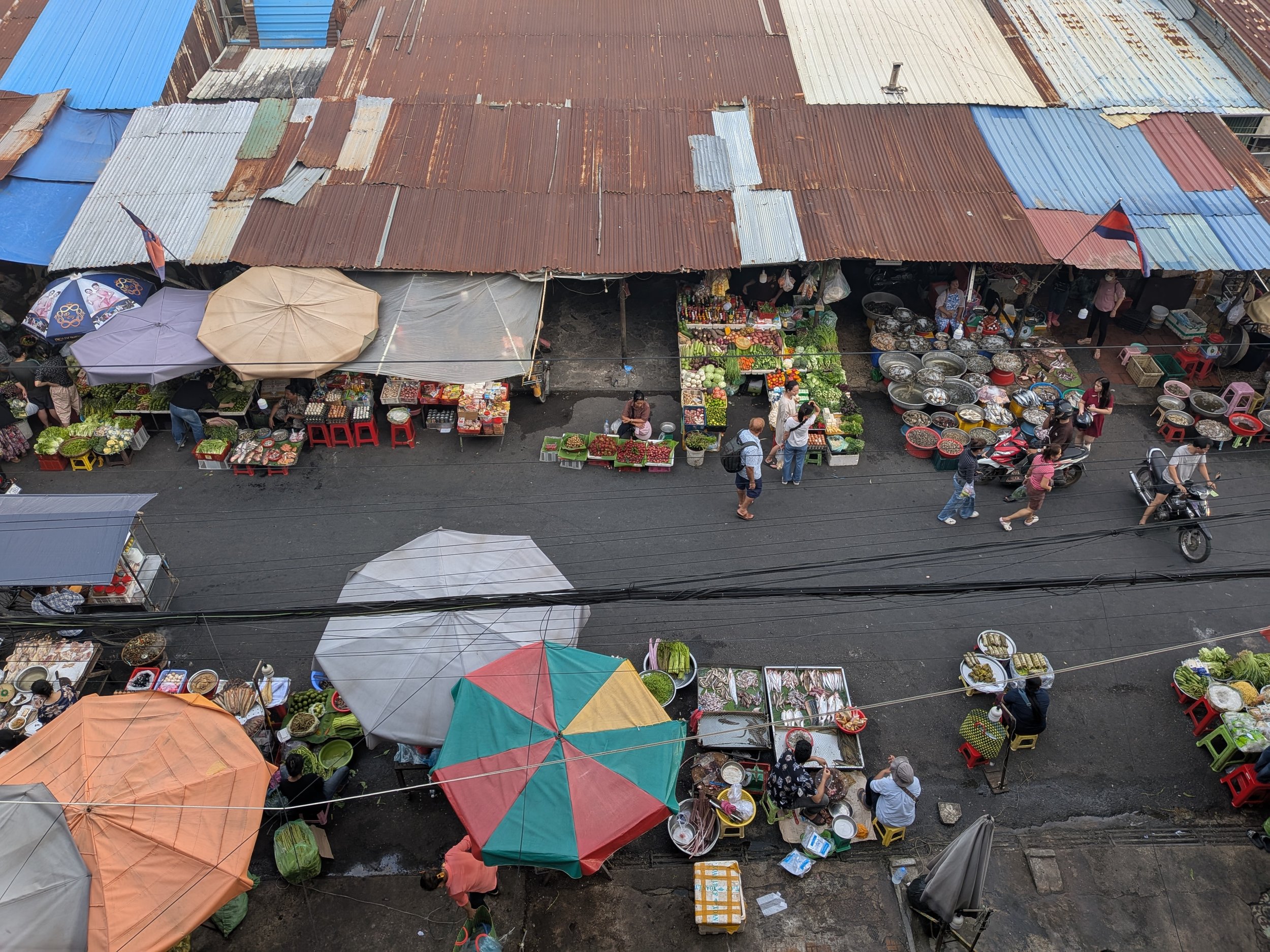
Foodborne diseases cause an estimated 600 million illnesses and 420,000 deaths each year, with the greatest burden occurring in low- and middle-income countries. Urban open-air informal markets are essential for food security, nutrition, and livelihoods, yet there is limited evidence on the One Health risks—the interconnected risks to human, animal, and environmental health—within these markets or how to design interventions that are effective, economically viable, and scalable.
The Foodborne Risk Assessment, Interventions, and Market Systems (FRAIMS) study is a formative implementation science study that generates the evidence needed to design contextually appropriate, economically viable, and scalable One Health interventions for urban open-air informal markets in low- and middle-income countries. Conducted in Cambodia, Kenya, and Mozambique, FRAIMS integrates quantitative exposure assessment, mixed-methods implementation research, and participatory co-design to understand One Health risks, identify contextual and behavioral determinants and market system opportunities, and develop vendor-centered implementation strategies for future evaluation and scale-up.
Aim 1. Quantitative Exposure Assessment: Develop pathogen-specific exposure models to estimate the relative contribution of informal market food, formal retail food, water, and person-to-person transmission to foodborne disease burden.
Aim 2. Contextual Analysis: Conduct qualitative interviews and structured market observations to understand stakeholder perceptions of One Health risks, the contextual determinants that shape those risks, and opportunities for interventions that improve both health and market performance.
Aim 3. Co-Design: Translate findings into vendor-centered, economically viable One Health intervention prototypes through participatory co-design workshops, producing a roadmap for future implementation trials.
By integrating epidemiology, implementation science, and participatory co-design across diverse settings, FRAIMS will generate new insights into One Health risks and how they are shaped by local contexts, behaviors, and market systems.
Timeline
2025-2027
Study Location
Cambodia, Kenya, Mozambique
Principal Investigators
Matthew Freeman
Funders
Gangarosa International Health Foundation
Project Staff
Erika Canda, Jedidiah Snyder,
students and Post Docs
Lyvannak Sam
Advisors
Kayoko Shioda